
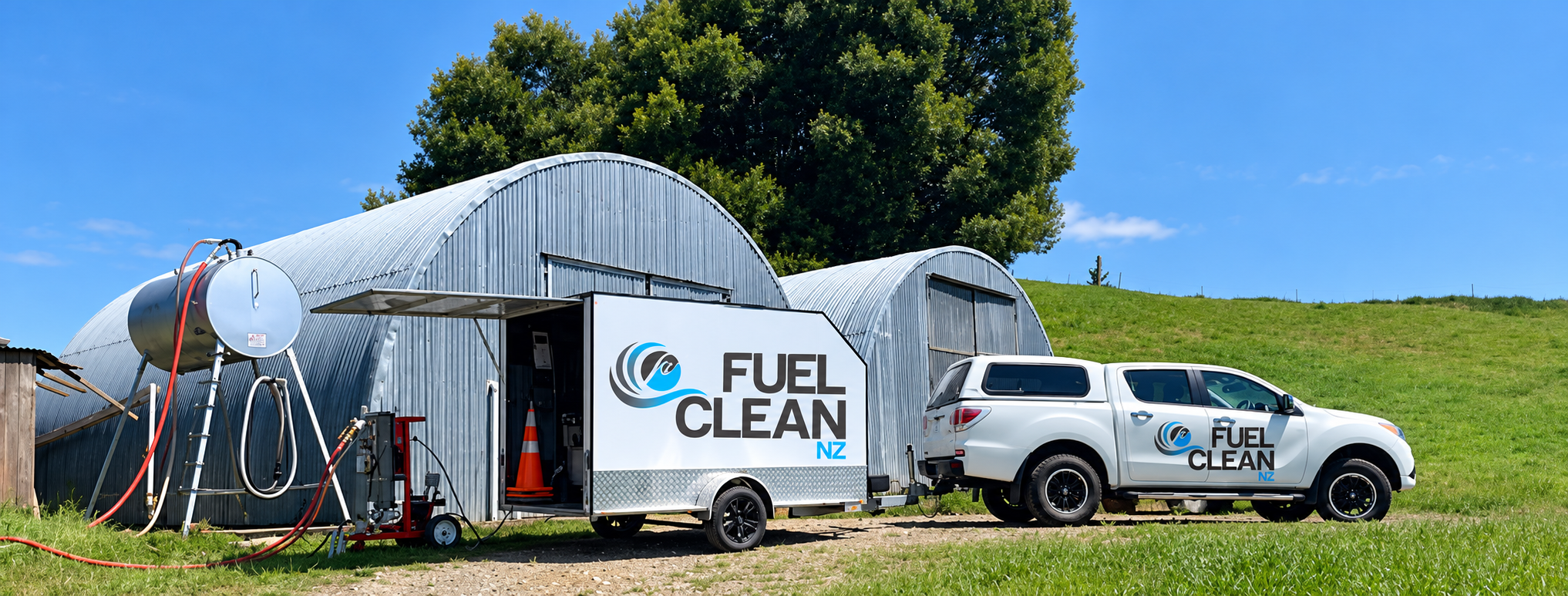
Fuel Clean NZ removes diesel bug, water and sediment from diesel tanks across Manawatū, onsite and without dumping your fuel. We test your diesel at three depths, polish it back to clean and put a maintenance plan in place, so your farm tank, standby generator and machinery start when you need them.
We’re a Manawatū business, working on farms and sites from Palmerston North and Feilding to Levin, Dannevirke and Marton.
Key Facts
- Onsite service: our mobile polishing unit comes to your tank
- Every tank tested at the top, middle and bottom, not just one sample
- Your fuel is cleaned and returned to the tank, nothing dumped
- Farm tanks, generator tanks, contractor and depot tanks
- Ongoing maintenance and remote monitoring available
- Call 027 968 0009 or email info@fuelclean.co.nz
Why does farm diesel go bad?
Diesel doesn’t stay fresh forever. Modern diesel contains a small share of biodiesel, which draws moisture out of the air. On a farm, that process gets plenty of help:
- Overhead and gravity-fed tanks heat up in the sun and cool overnight. Every cycle pulls damp air in through the vent and leaves condensation on the tank walls.
- Seasonal use. A tank filled before winter can sit for months, then get hammered through silage, cropping and harvest. Water settles at the bottom while it sits, and the refill stirs it straight back up.
- Worn vents, caps and seals let rain in through a wet Manawatū winter.
Water is the problem. It collects at the bottom of the tank, and bacteria, yeast and mould (diesel bug) grow where the water meets the fuel. The result is black sludge, rust and blocked filters, usually at the worst possible moment.
Signs your farm diesel is contaminated
- Tractor or loader filters blocking more often than they should
- Engines losing power, hesitating or cutting out under load
- Dark, hazy or cloudy fuel, or sludge in the filter bowl
- A sour or rotten smell at the tank
- Water in the bottom of a jar sample
Modern common-rail engines run very fine tolerances, and most engine warranties exclude damage caused by contaminated fuel. A blocked filter is the cheap warning. A set of injectors is the expensive one.
Farm diesel tank cleaning and fuel polishing
You don’t need to drain your tank or pay to dispose of the fuel. Here’s how a farm visit works:
- Test. We draw samples from the top, middle and bottom of the tank. Water sinks and clean-looking fuel floats, so a single sample can hide the problem. You get a clear report.
- Polish. High-flow directional lances stir the tank so sediment and sludge can’t hide in corners. The fuel runs through our filters and coalescer, which strip out water, particles and diesel bug, then goes back into your tank.
- Fix the cause. We check vents, caps, outlet filters and drain points and tell you what’s letting water in.
- Keep it clean. A simple maintenance schedule keeps your fuel in spec between visits.
Polishing is almost always cheaper than dumping. Disposing of contaminated diesel and refilling a large tank can cost several times more than cleaning what you already have, before you count the downtime.
Standby generators for dairy sheds and rural businesses
Cows still need milking when the power goes out. A dairy shed generator is only as reliable as the diesel in its tank, and that diesel can sit untouched for a year or more between outages.
The same goes for Manawatū facilities that rely on backup power:
- Dairy sheds, cool stores and pump sheds
- Aged care, medical centres and schools
- Distribution centres and warehouses in and around Palmerston North
- Telecommunications, water and council infrastructure
We test generator diesel, polish it back to clean and set up a maintenance schedule so the generator starts first time. For critical sites, remote monitoring lets you see your fuel condition without a site visit.
Other diesel we look after in Manawatū
- Agricultural contractors’ service tanks and ute tanks
- Irrigation pumps
- Earthmoving, civil and quarry plant
- Transport yards and depot tanks
- Lifestyle block generators and boats
Areas we cover
Palmerston North, Feilding, Ashhurst, Levin, Foxton, Shannon, Bulls, Marton, Hunterville, Taihape, Dannevirke, Woodville, Pahiatua, Eketāhuna and the rural Manawatū, Rangitīkei, Tararua and Horowhenua districts.
FAQs
How do I know if my farm diesel has diesel bug?
Frequent filter blockages, black sludge in the filter bowl, dark or cloudy fuel and a sour smell are the common signs. The only way to be sure is a sample from the bottom of the tank, which is where water and bug collect.
Can you clean a diesel tank without emptying it?
Yes. Fuel polishing circulates the diesel through filters and a water separator while it’s still in the tank, then returns the clean fuel. You keep your fuel and don’t pay for disposal.
How often should a farm diesel tank be tested?
At least once a year, and before your busy season if the tank has sat over winter. Tanks with a history of water or bug should be checked every six months.
Is a diesel bug treatment additive enough?
A biocide kills diesel bug, but the dead sludge and the water stay in the tank and keep blocking filters. Polishing physically removes the water, sludge and particles. Additives work best after the tank has been cleaned.
Will contaminated diesel void my tractor warranty?
Most engine manufacturers exclude damage caused by contaminated fuel from their warranties, so the repair cost usually falls on the owner. Regular testing gives you a record that your fuel was in good condition.
How often should standby generator diesel be tested?
Once a year at minimum, and every six months for dairy sheds and critical facilities. Generator diesel ages even when the generator never runs.
Book a diesel test in Manawatū
Call 027 968 0009 or email info@fuelclean.co.nz for a fuel test or polishing quote. We’ll come to your farm, depot or site.