
Fuel Clean NZ removes diesel bug, water and sediment from forestry fuel tanks and standby generator tanks across Northland, onsite and without dumping your fuel. We test at three depths, polish your diesel back to clean and set up a maintenance plan, so harvesting gear and backup power keep running.
We come to your skid site, yard, farm or facility, from Mangawhai to Kaitaia.
Key facts
- Mobile polishing that works on remote sites and forestry roads
- Every tank sampled at the top, middle and bottom
- Diesel cleaned and returned to the tank, nothing dumped or carted out
- Skid site tanks, fuel trailers and pods, yard tanks and generator tanks
- Maintenance programmes and remote monitoring available
- Call 027 968 0009 or email info@fuelclean.co.nz
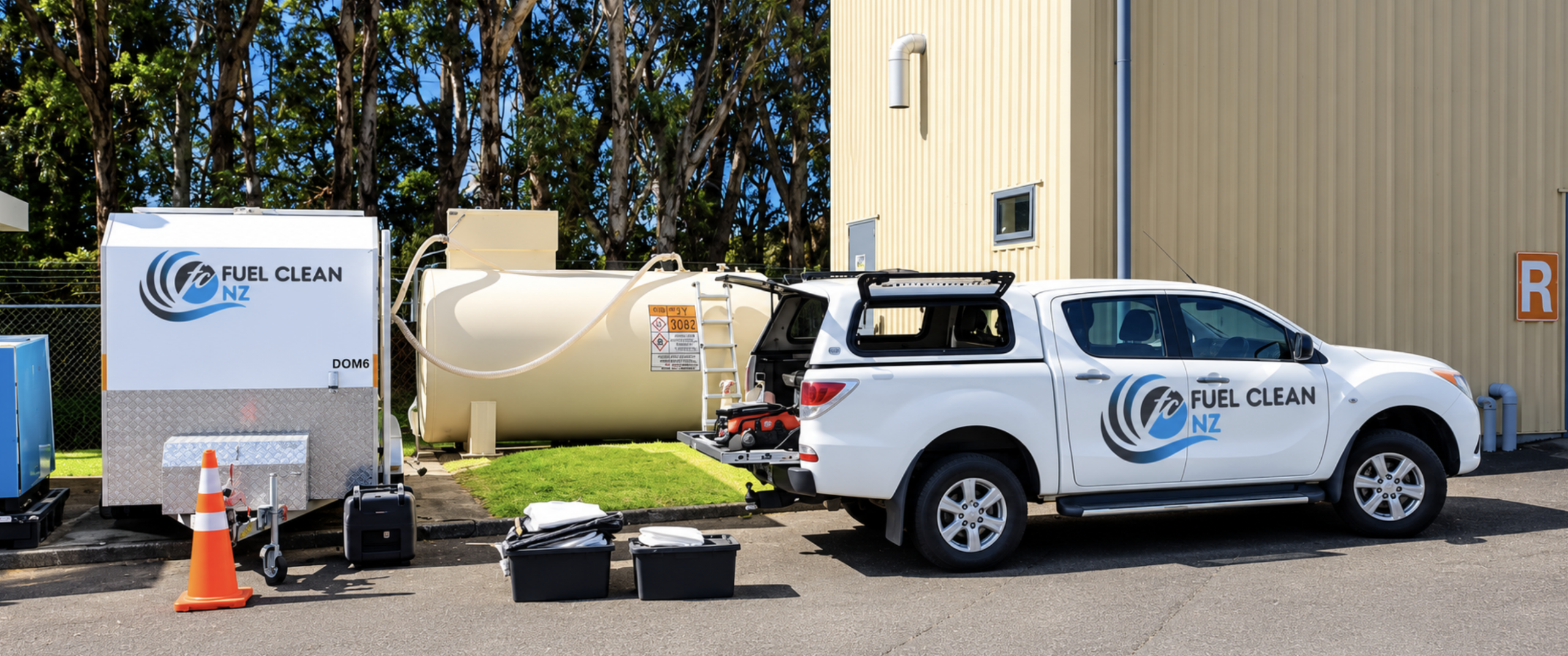
Forestry fuel polishing
Diesel is the lifeblood of a harvesting operation, and Northland is hard on it. The climate is warm and humid, rain is heavy, and fuel lives in tanks, trailers and pods parked on exposed skid sites. Every temperature swing pulls moist air in, condensation collects in the bottom of the tank, and diesel bug grows where water meets fuel.
Then the sludge goes into a harvester, processor, skidder or loader with a high-pressure common-rail fuel system. Blocked filters stop the machine. Contaminated fuel can damage injectors and pumps, and most engine warranties exclude damage caused by dirty fuel.
Why polishing beats dumping on a forestry block
When fuel on a remote site goes bad, the usual answer is to pump it out, cart it away and truck in replacement diesel. That’s expensive, slow and an environmental risk on a forestry block. Our rule-of-thumb estimate: disposing of and replacing a 5,000 L tank costs around $20,000, against roughly $5,000 for polishing and a maintenance programme, before you count a crew standing idle.
Polishing cleans the fuel you already have, where it sits.
How we work on forestry sites
- Test each tank at three depths, including fuel trailers and service trucks.
- Polish the fuel through our filters and coalescer, with high-flow lances to break up sludge, and return it clean.
- Advise on breathers, filling practice, outlet filtration and where tanks are parked.
- Maintain on a schedule that fits your harvest moves, so fuel stays clean from one block to the next.
We work with harvesting contractors, roading and earthworks crews, forest managers and log yards.
Standby generator fuel polishing
Northland knows what a long outage looks like. Cyclone Gabrielle in 2023 left communities across the region without power for days, and generators that had sat for years didn’t always start, or stopped once old fuel from the bottom of the tank reached the filters.
Cyclone season runs from November to April, so now is the time to check. We look after generator diesel for:
- Rural homes, lifestyle blocks and farms
- Marae and community halls that act as welfare centres
- Medical centres, aged care and schools
- Orchards, packhouses and cool stores
- Dairy sheds and water pumping
- Water treatment, council and telecommunications sites
We test the fuel, polish it back to clean and set up a maintenance plan, with remote monitoring for critical sites.
Other diesel we look after in Northland
- Boats: launches, yachts, charter, dive and fishing vessels in the Bay of Islands, Whangārei Town Basin, Tutukākā and Mangōnui
- Orchard and farm irrigation pumps
- Quarries, civil contractors and earthmoving plant
- Transport yards and bulk diesel storage
Areas we cover
Whangārei, Kerikeri, Paihia, Russell, Kaikohe, Kawakawa, Kaitaia, Mangōnui, Dargaville, Ruawai, Maungaturoto, Mangawhai, Ruakākā and the wider Far North, Whangārei and Kaipara districts.
FAQs
Why does forestry diesel get contaminated so quickly?
Skid site tanks and fuel pods sit outside in warm, humid weather with big temperature swings, so condensation forms inside them. Fuel is also transferred more often, and every transfer is a chance for water and dirt to get in.
Can you polish fuel on a remote skid site?
Yes. Our equipment is mobile and works on any tank we can get a vehicle near, including fuel trailers and pods.
Is it cheaper to polish fuel or replace it?
Polishing is usually far cheaper. You keep the fuel, avoid disposal costs and avoid trucking replacement diesel into the forest.
How often should generator diesel be tested in Northland?
At least once a year, ideally before cyclone season starts in November. Critical sites should test every six months.
Is a diesel bug additive enough?
A biocide kills the bug, but the dead sludge and water stay in the tank and keep blocking filters. Polishing removes them. Additives work best on a clean tank.
Do you service boats in Northland?
Yes. We polish fuel and remove diesel bug from boat tanks at the berth or on the hardstand.
Book fuel polishing in Northland
Call 027 968 0009 or email info@fuelclean.co.nz. We’ll come to your skid site, yard, boat or facility.